This blog post is AI-generated by Claude and inspired by the original PolyTripper video linked below.
Hi Language Buddy!
I hope you had a productive week. Today I want to talk about leaving things where you can see them—a simple life hack that can dramatically improve your language learning consistency.
The easiest way to learn something is when that thing is accessible and integrated into your daily life. When you have to search in a drawer, dig through a bookcase, or go to some far-flung corner of your house to find your study materials, you're creating friction that kills motivation.
Friction is the enemy of habit formation.
I find a piano is much more suitable than a violin for learning music, and it's not just about the instrument itself—it's about visibility and accessibility. A piano is just there, standing in your living space. When you see it, you might get the spontaneous motivation to play.
But with a violin, people typically put it away in a case, then store the case somewhere. When I knew people taking violin lessons, I encouraged them to leave the violin open and lying around in the living room rather than putting it away and storing it. That way they could see it, be inspired by it, and pick it up spontaneously.
Behavioral psychologists call this "environmental design." Your surroundings constantly send signals to your brain about what actions to take. Visible cues prompt action; hidden items are forgotten.
Research by Stanford's BJ Fogg shows that behavior change happens most reliably when you modify your environment rather than relying solely on willpower. Make good behaviors easier to start and bad behaviors harder to continue.
In his studies on habit formation, James Clear found that visual cues are one of the most powerful triggers for automatic behavior. When something is visible, your brain interprets it as important and actionable.
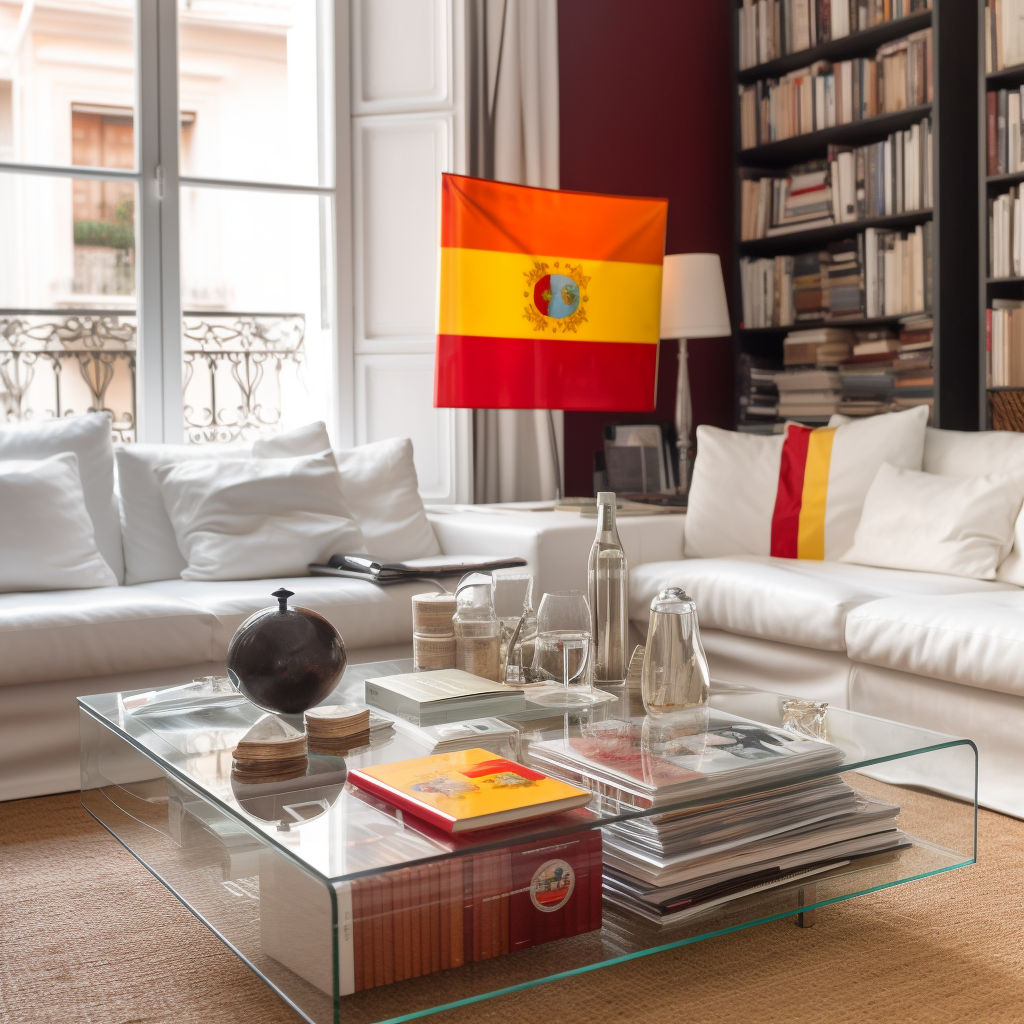
With my Russian book, I just leave it lying on the living room table because I like to pass it, see it, and think, "Oh, maybe I'll do some Russian now." It's a constant, gentle reminder that doesn't require any effort to activate.
This isn't about creating clutter—it's about strategic placement of the tools that support your goals.
Here are some practical ways to apply this principle:
Study materials: Leave your textbook, notebook, or flashcards somewhere you'll see them multiple times per day.
Digital tools: Keep language apps on your phone's home screen, not buried in folders.
Audio materials: Leave headphones and your language podcasts/audiobooks easily accessible.
Writing tools: Keep a dedicated language learning notebook and pen in a visible, convenient spot.
Each time you see your study materials, you're getting a micro-reminder of your language learning goal. Even if you don't act on it every time, you're reinforcing the neural pathway that connects "free moment" with "language practice."
Sometimes you'll ignore the cue, but sometimes you'll think, "I have five minutes, let me flip through a few pages." Those spontaneous study sessions often turn into longer, more productive periods because you're acting on genuine motivation rather than forced discipline.
The goal is to make starting easier than not starting. When your materials are visible and accessible, the activation energy required to begin studying drops dramatically.
Compare these scenarios:
High friction: "I should study... but first I need to find my book, clear a space, get my notebook..."
Low friction: "There's my book. Let me just flip through a page while I drink my coffee."
One leads to procrastination, the other to action.
That's my little life hack for you this week. Leave your language learning materials lying around where they're easily accessible, where you see them all the time, and where they can inspire you to actually approach them and use them.
Hope you have a productive upcoming week!